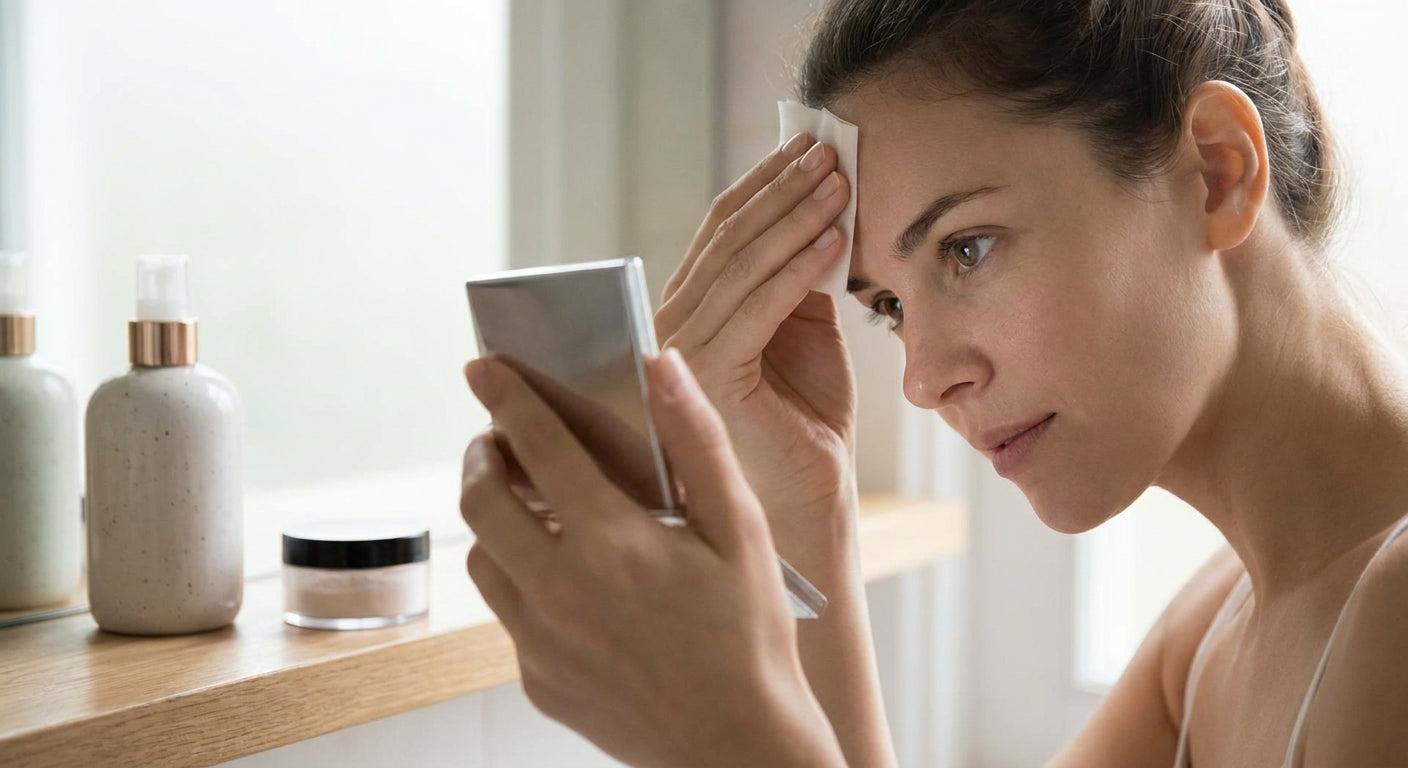
Midday shine on the T-zone usually isn't a sign your skin makes too much oil — it's a sign your routine is stripping it, then your face overcorrects. Fix the routine, not just the shine, and the fix holds past noon.
- Cleansing twice a day, not four times, is the real fix for how to stop oily shine face without stripping skin.
- Oil-Free Zinc Face Gel for Men replaces heavy cream on shine-prone zones — skip anything with mineral oil or petrolatum.
- Skipping SPF because your face feels oily backfires; use an oil-free SPF 30 daily through 2026, even indoors.
- Rebound oil from over-washing takes 2 to 3 weeks to settle once you stop stripping the skin barrier.
Why this matters
Oily skin isn't a flaw to correct — it's a gland doing its job at a rate your routine hasn't adjusted for. Sebaceous glands sit densest across the forehead, nose, and chin, which is exactly why shine shows up there first and worst by early afternoon.
The common mistake is treating shine as dirt. Wash harder, wash more often, use a stripping bar soap, and the skin barrier reads that as an emergency. It responds by producing more oil, faster, to compensate. You end up shinier by 2026's standards than you were before you started "fixing" it.
Olirs builds its skincare around ingredient function, not marketing claims — read the INCI on anything you put on your face before you decide it's the right call for oily skin. That habit alone solves half of what goes wrong with shine control.
What you'll need
- A gel or foam cleanser suited to oily skin, not a bar soap or a scrub
- An oil-free, non-comedogenic moisturiser (zinc-based works well for the T-zone)
- A mattifying or clarifying gel for midday touch-ups
- Blotting papers or a clean tissue — not a wipe
- An oil-free SPF 30, applied daily regardless of weather
- 5 to 10 minutes, morning and night
The steps
1. Cut cleansing to twice a day
Washing your face more than twice daily strips the lipid layer that keeps oil production in check. Once that layer thins out, glands overproduce to rebuild it, and you get shinier, not less shiny.
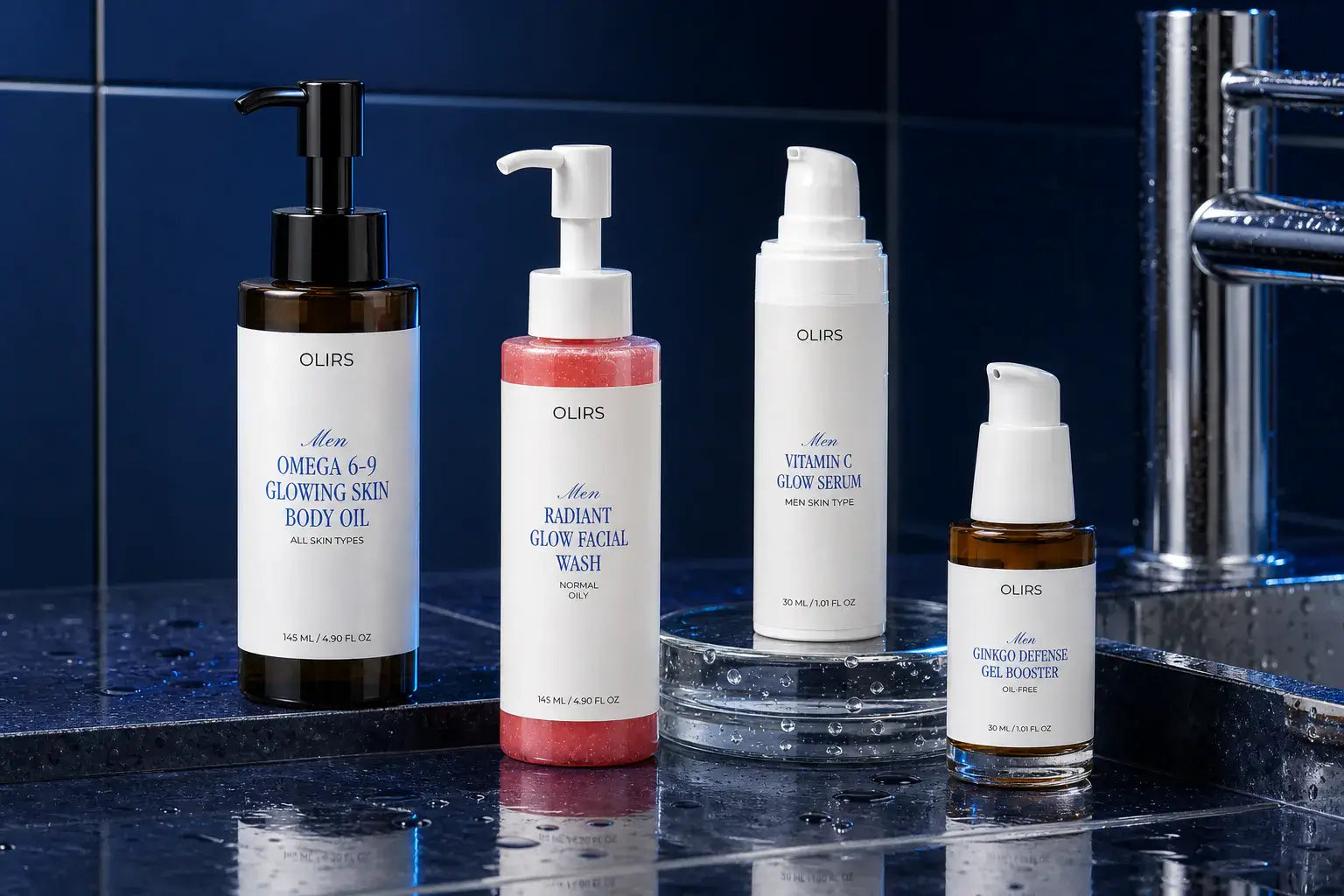
Use a gel or foam formula, once in the morning and once before bed. Radiant Glow Facial Wash is built as a 98% natural-origin gel cleanser on an aloe base — the aloe helps skin feel comfortable through the wash instead of tight afterward.
Expected outcome: skin feels clean, not squeaky. Squeaky-clean is the sign you've gone too far. Common mistake: washing a third time midday because the face looks oily. That third wash is what causes tomorrow's oil.
2. Drop the bar soap and the physical scrub
Bar soap runs alkaline, well above the skin's natural pH of roughly 4.5 to 5.5. That mismatch disrupts the acid mantle, the thin protective film that regulates moisture and oil at the surface.
Physical scrubs with jagged exfoliating beads do the same damage mechanically, by micro-tearing the surface. Swap both for a pH-appropriate cleanser and save any exfoliating acid for a dedicated step, not your daily wash.
3. Moisturise with something oil-free, every time
Skipping moisturiser because your skin already looks oily is the single most common shine mistake. Dehydrated skin — skin lacking water, not oil — actually produces more sebum to compensate, which reads on your face as more shine, not less.
Oil-Free Zinc Face Gel for Men is formulated as a lightweight, oil-free gel rather than a heavy cream, built to sit under a T-zone without adding to the shine problem. Apply it after cleansing, both morning and night, while skin is still slightly damp.
Common mistake: switching to "nothing" instead of switching formulas. The fix for oily skin is a lighter moisturiser, never zero moisturiser.
4. Target the T-zone with a mattifying gel, not your whole face
Shine concentrates on the forehead, nose, and chin because that's where sebaceous gland density is highest. Applying a clarifying or mattifying gel across your entire face when only the T-zone runs oily can leave your cheeks and jawline dry and flaky by the afternoon.
Spot-apply a lightweight gel formula to the T-zone only, layered over your regular moisturiser. This is a targeting problem, not a product-strength problem — most guys reach for something stronger before they try applying less, in less area.
5. Blot at midday instead of washing again
When shine builds up around lunchtime, blotting paper pressed gently against the T-zone lifts surface oil without disturbing the skin barrier. A wet wipe or a splash of water does the opposite — it reactivates the cleanser residue and moisturiser underneath, and the face often looks worse ten minutes later.
Press, don't rub. One sheet, three to four spots, done in under 30 seconds. Common mistake: rubbing a tissue across the face, which spreads the oil instead of lifting it off.
6. Apply SPF 30 daily, oil-free formula only
Sunscreen gets skipped by guys with oily skin more than any other group, usually because a heavy, occlusive SPF genuinely does make shine worse. The answer isn't skipping it — UV exposure is the single biggest driver of visible skin ageing over time, oily skin included — it's picking an oil-free, non-comedogenic formula.
Apply it as the last step of your morning routine, every day, including overcast days in 2026's shoulder seasons when UV still gets through cloud cover.
7. Read the ingredient list before you buy anything new
Comedogenic oils, heavy silicones, and occlusive waxes sit near the top of the ingredient list on plenty of products marketed as "for oily skin." The marketing claim and the INCI list don't always agree.
Check the actual ingredient order, not the front-of-bottle claim. This is the whole point of reading the label instead of trusting the packaging — a formula that says "oil-control" with dimethicone loaded near the top is working against you, not for you.


Troubleshooting
- Still shiny by noon after two weeks of the new routine. Give it longer — rebound oil from a stripped barrier takes 2 to 3 weeks to fully calm down. Stopping the fix early is the most common reason it "doesn't work."
- Skin feels tight right after cleansing. The cleanser is still too harsh for your skin, even if it's marketed for oily skin. Switch to a gentler gel formula and check the ingredient order for sulfates near the top.
- Breakouts showed up after adding the mattifying gel. You're layering too much product on the same zone. Cut back to moisturiser alone for a week, then reintroduce the gel every other day.
- Shine only shows up on the nose and forehead, nowhere else. That's normal T-zone gland density, not a routine failure. Spot-treat that zone only — don't apply mattifying products across the whole face.
- Foundation or SPF slides off by early afternoon. Usually too much product on top of an already-oily base. Use a thinner layer of moisturiser and let it fully absorb — roughly 2 to 3 minutes — before applying anything on top.
- Face looks oilier since starting SPF. The SPF formula itself is occlusive. Swap to an oil-free, gel-based sunscreen rather than dropping SPF altogether.
Tools and resources
- A cleanser suited to oily skin, applied twice daily — not a bar soap
- An oil-free moisturiser layered under any mattifying step
- Blotting paper for midday touch-ups, kept in a bag or desk drawer
- The INCI list on the back of any product, checked before purchase, every time
- An oil-free SPF 30, non-negotiable through 2026
What to do next
Once shine is under control, the next problem most guys hit is picking the wrong cleanser strength for their actual skin type — too gentle does nothing, too harsh restarts the whole cycle. The deeper breakdown on matching a face wash to oily skin, without over-drying it, covers that trade-off in more detail.
FAQ
What causes oily shine on the face by midday?
Sebaceous glands concentrated in the T-zone produce oil continuously, and it surfaces visibly by midday once the morning's moisturiser and cleanser residue wear off. Over-cleansing earlier in the day makes this worse by prompting glands to overproduce.
Is it bad to wash your face more than twice a day if it's oily?
Yes — washing more than twice daily strips the skin's lipid layer and triggers rebound oil production. Twice a day, morning and night, is the range that controls oil without provoking more of it.
Does moisturiser make oily skin shinier?
An oil-free, non-comedogenic moisturiser doesn't add shine; skipping moisturiser altogether often does, because dehydrated skin overproduces oil to compensate. The formula matters more than whether you use one at all.
What ingredients help control oil without drying skin?
Zinc-based formulas and lightweight gel textures help manage surface oil while still hydrating the skin. Heavy oils, mineral oil, and thick silicones tend to work against oil control despite oil-control front-of-bottle claims.
Is SPF necessary for oily, shine-prone skin?
Yes, daily SPF 30 is necessary regardless of skin type — the fix for oily skin is choosing an oil-free, gel-based sunscreen, not skipping sunscreen. UV exposure remains a leading driver of visible skin ageing over time.
How long does it take to stop overproducing oil?
Rebound oil from a stripped skin barrier typically settles within 2 to 3 weeks of switching to a gentler, twice-daily routine. Results vary by how aggressive the prior routine was.
Can stripping your skin actually cause more shine?
Yes — stripping the lipid layer through over-washing or harsh cleansers signals the skin to produce more oil to rebuild its protective barrier. This is the most common reason shine gets worse after starting an aggressive anti-oil routine.
What's the difference between oily skin and dehydrated skin that looks oily?
Oily skin overproduces sebum consistently across the T-zone; dehydrated skin lacks water and can overproduce oil as a compensating response, which looks similar but needs hydration, not oil-stripping, to resolve.
One last thing
The fastest way to tell if your shine is a gland problem or a stripped-barrier problem: skip the mattifying gel for three days and use only a gentle cleanser plus an oil-free moisturiser. If shine drops within that window, the old routine was the cause, not your skin.